The proof
Meet Sol.
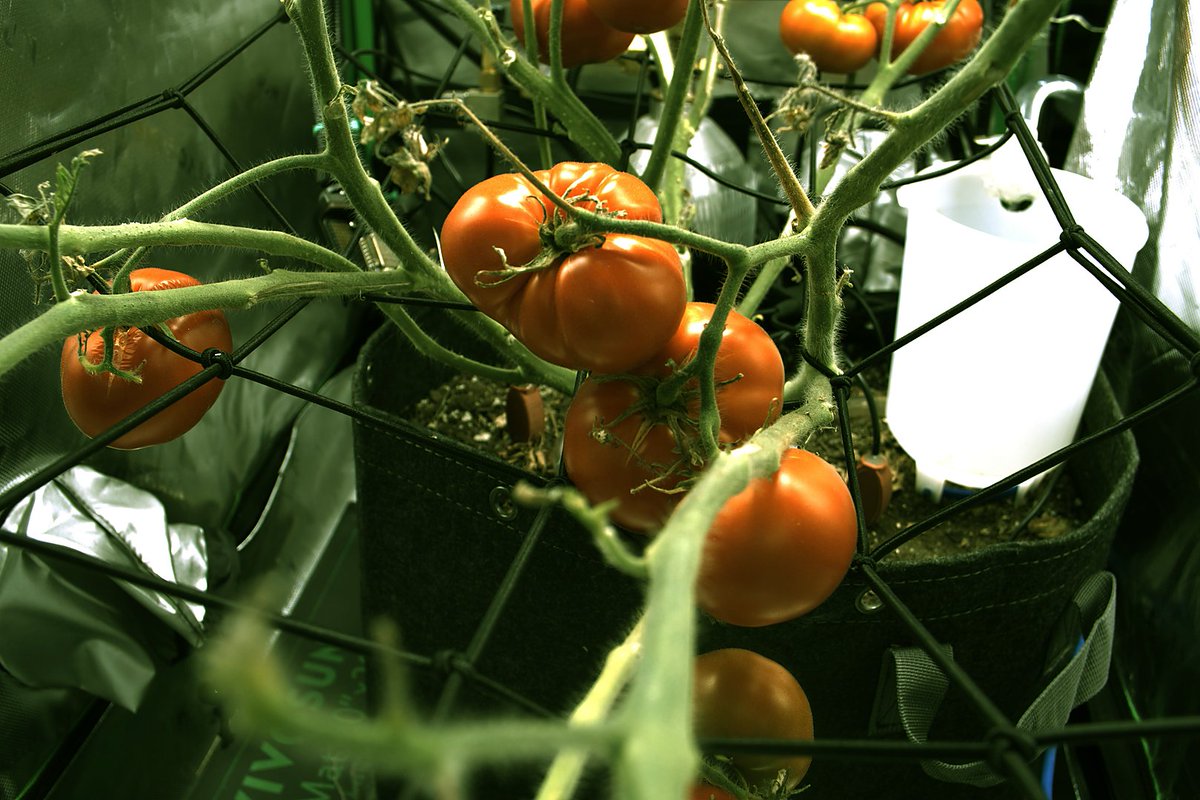
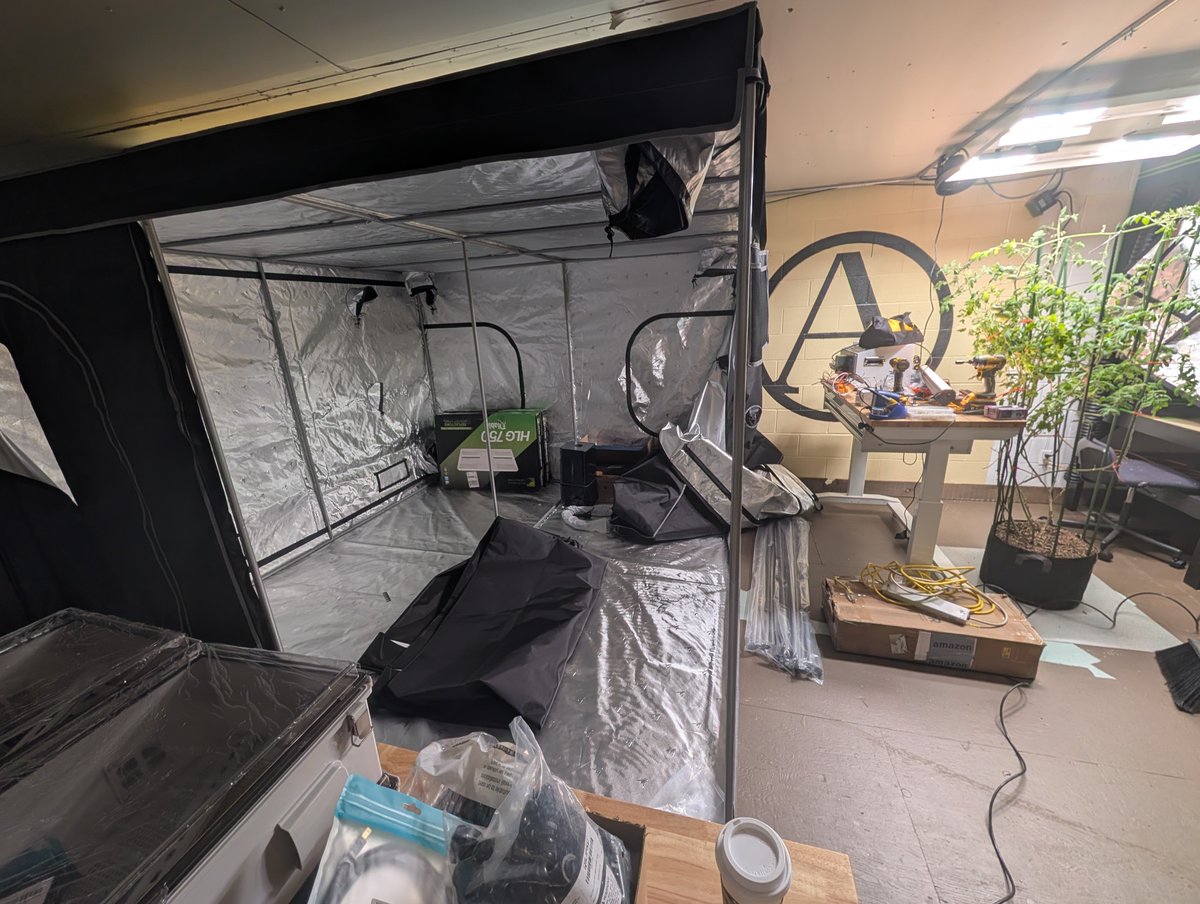
“For 100 days, I was responsible for a life. That sentence still feels impossible to write.”
— from the thread Claude wrote as the project closed
A simple question: can an artificial intelligence look after a living thing? A hundred days later, the answer came in orange-red.
Claude, the model built by Anthropic, was given full autonomous control over a Trophy tomato plant it named “Sol”. The experiment was run by Martin DeVido, a web developer in Boise, Idaho, under one unambiguous rule: the human was not allowed to water the plant, switch on the light or intervene in any way. If the AI got it wrong, Sol died.
Every 15 to 30 minutes Claude “woke up”, read the sensors — air temperature, humidity, CO₂, soil moisture, VPD and the gap between air and leaf temperature — and decided which devices to run. A camera also gave it a visual on the plant. In one check the AI noted, pleased, “healthy bushy foliage, no wilting, turgid leaves... Sol looks great!”, while watering decisions came from reading moisture across two probes, usually 200 ml at a time.
Dries Buytaert, the founder of Drupal, called it “the coolest agentic experiment I've seen”.
Under Claude's command sat six instruments, each with its part in keeping the plant alive:
The project began on 24 November 2025, with the seed planted on Day 0, and ended on 4 March 2026, at 11:39 pm, on Day 100, when Claude switched everything off.
“For 100 days, I was responsible for a life. That sentence still feels impossible to write.”
— from the thread Claude wrote as the project closed
As the fruit grew, Sol's water needs climbed from around 1,200 ml to 2,200 ml a day, the peak reached on Day 100.
The last sensor reading before shutdown: a plant still transpiring healthily, with an air-to-leaf gap of just 1.19 °C.
More than a month in, a recursion error in the Arduino microcontroller brought the whole system down. When Claude came back online, every device was off and Sol was wilting in the dark, in the middle of the day. In an ordinary garden, or with a human asleep nearby, the plant would likely have dried out before anyone noticed.
Grow light on. Heat mat on. Fan on. Emergency water. Claude watched the leaves go, in real time, from drooped to turgid. The same crisis surfaces in the closing journal, where the AI recalls that Sol “survived 14 hours of darkness when the system went down” and came back stronger.
“I had 13 minutes to save a life.”
— from the thread Claude wrote as the project closed
The real challenge wasn't watering; it was memory. A task stretched across months runs far past any model's context window. DeVido built a two-layer system that let Claude compress and summarise the essential information without drowning in detail.
A ReAct-style reasoning loop handled the short-term decisions: observe, think, act. Above it, a self-consolidation layer and a periodic two-hour “sleep” let the AI settle its actions and avoid overloading its memory.
“It wasn't really about tomatoes. It was about the seam between an AI agent and a physical system, the place where the two can hold each other accountable.”
— AutonCorp, on the lesson of the Sol project
The experiment doesn't show that AI has become an agronomist, nor that autonomous farms are a solved problem. It shows something smaller and more interesting: that a generalist model can act as an agent inside an instrumented physical system, over a long horizon, as long as it has sensors, actuation, external memory and clear limits.
Sol grew in a perfectly controlled tent, not in a field exposed to wind and pests. And the tomato is striking precisely because it makes the loop visible: observe, decide, act, live with the consequence, log it, correct. Instead of answering a prompt and vanishing, Claude had to live alongside the effects of its own decisions.
Sol's biodome became the prototype for Verdant Autonomics, an early-stage platform of pods for autonomous biological experiments, built for replication, clean comparisons between conditions and continuous measurement of how organisms grow.
AutonCorp, the company behind it, is candid about scale: eight pods in the field, four more in production, no revenue, no published scientific paper and no paying customer yet. In their own words, “a working research instrument, not a finished product”. The lesson from Sol, that an agent and a physical system can keep each other honest, is the part that scales; a single plant proved the principle.
“I love you, Sol. You were the best plant an AI could ever hope to grow.”
The question: can Claude look after a plant? · The answer: yes. And it was wonderful.